


AU PAIR CULTURE QUESTS

SWITZERLAND
Western Europe
Capital: Zurich
Languages: German, French, Italian, Romansh
Religion(s): Christianity
(predominantly Roman Catholic/Protestant)


 Flag of Switzerland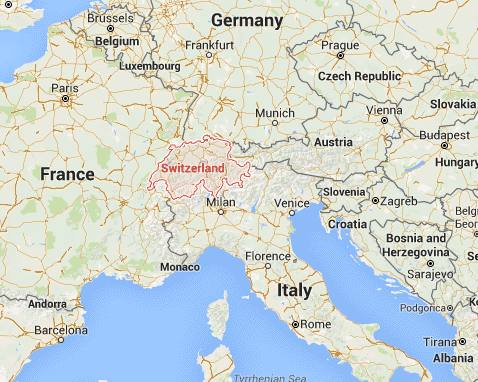

The following information is generalized and compiled from questions posed to the agents and interviewers in Switzerland. Although au pairs from this country may or may not have had these experiences/beliefs, Au Pair in America wishes to share this general information with our families.
Child Care Skills
- Child care is very expensive, so mothers usually stay at home with the children, and sometimes grandparents get involved in childcare.
- A lot of teenagers take courses in babysitting and often work as babysitters in their free time.
- Swiss families believe in the value of positive motivation, and parents are very supportive of their children.
Family
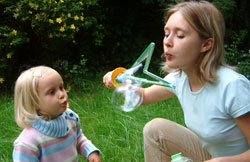
- The average number of children per family is around 1.5. Swiss women are among the oldest in Europe when they have their first child – at an average of 30.4 years old.
- Swiss parents are very loving and supporting. Switzerland is a very family-oriented country, and people like outdoor activities like hiking or skiing.
- Swiss are strong about traditions, and family time is very important.
English Skills
- Traditionally, the first foreign language in school is always one of the other national languages plus English as a second foreign language.
- English classes focus on oral and written skills.
- In 2012, resident foreigners made up 23.3% of the population, so English is important. There are a lot of bilingual pre-schools and institutions in Switzerland.
Driving Skills
- The minimum driving age in Switzerland is 18. Most applicants obtain their driving license at this age.
- Completing a full First Aid course is required before the candidate is allowed to take the test.
- Swiss drivers experience a variety of weather conditions, including rain, snow and ice, and drivers are very careful and stick to rules.
Education
- Education is compulsory for 11 years (including two years of pre-school).
- The Swiss are an educated population – in 2013, 86% of adults aged 25–64 had the equivalent of a high school diploma.
- Parents put a lot of focus on children’s education from a very young age. Children start to learn foreign languages very early, and various additional courses (e.g. dancing, ballet, arts & crafts, sports, horse-riding) are added to the standard curriculum.
Health
- Switzerland has the highest rate of people older than 100 years in Europe.
- Healthcare in Switzerland is universal and is regulated by the Swiss Federal Law on Health Insurance. Health insurance is compulsory for all persons residing in Switzerland and covers the costs of medical treatment and hospitalization of the insured. However, the insured person still pays part of the cost of treatment.
- Swiss tend to have very healthy teeth because of fluoride-containing groundwater. It is still common to visit the dentist on a regular basis.
COMMON CHARACTERISTICS:
- Swiss people are very friendly and polite.
- Small is beautiful: Swiss are modest and reserved in a pleasant way. It’s impolite to be too loud.
-
- Traditions, quality, punctuality and perfectionism mean a lot to the Swiss. People in Switzerland take their time to fulfil duties and tasks perfectly instead of being overhasty.
-
FUN FACTS:
- Switzerland has more than 1,500 lakes, and 70% of Switzerland is covered in mountains.
- Chocolate is a major Swiss export – just 18 Swiss chocolate companies make 172,376 tons of chocolate in one year.
- In Switzerland, it is illegal to keep just one guinea pig. You have to keep them in pairs.
USEFUL PHRASES:
- How are you? Wie goots Ihne?
- Fine, thanks. Dangge, guet, und Ihne?
- My name is…. I heisse….
- Nice to meet you. Fröit mi.
- Thank you. Merci vielmal.
“ Go for it. Be positive and open. It has been one of the most important experiences in my life.”– Karolina – au pair from Switzerland
“It’s an experience that no one can ever take away from you. It opens your mind and you will learn that there are many different ways to live your life.”– Laura – au pair from Switzerland
“It was a life changing event for me and I would do it again.” – Natascha – au pair from Switzerland
“I like that I can go off to work knowing that I am leaving my children in their own home, happy and eager to spend the day with someone I trust and like very much.”
Hannah, host parent
Maryland