







AU PAIR CULTURE QUESTS

BOSNIA & HERZEGOVINA
Central/Southern Europe
Capital: Sarajevo
Languages: Bosnian, Croatian & Serbian
Predominant Religion(s): Islam / Roman Catholic


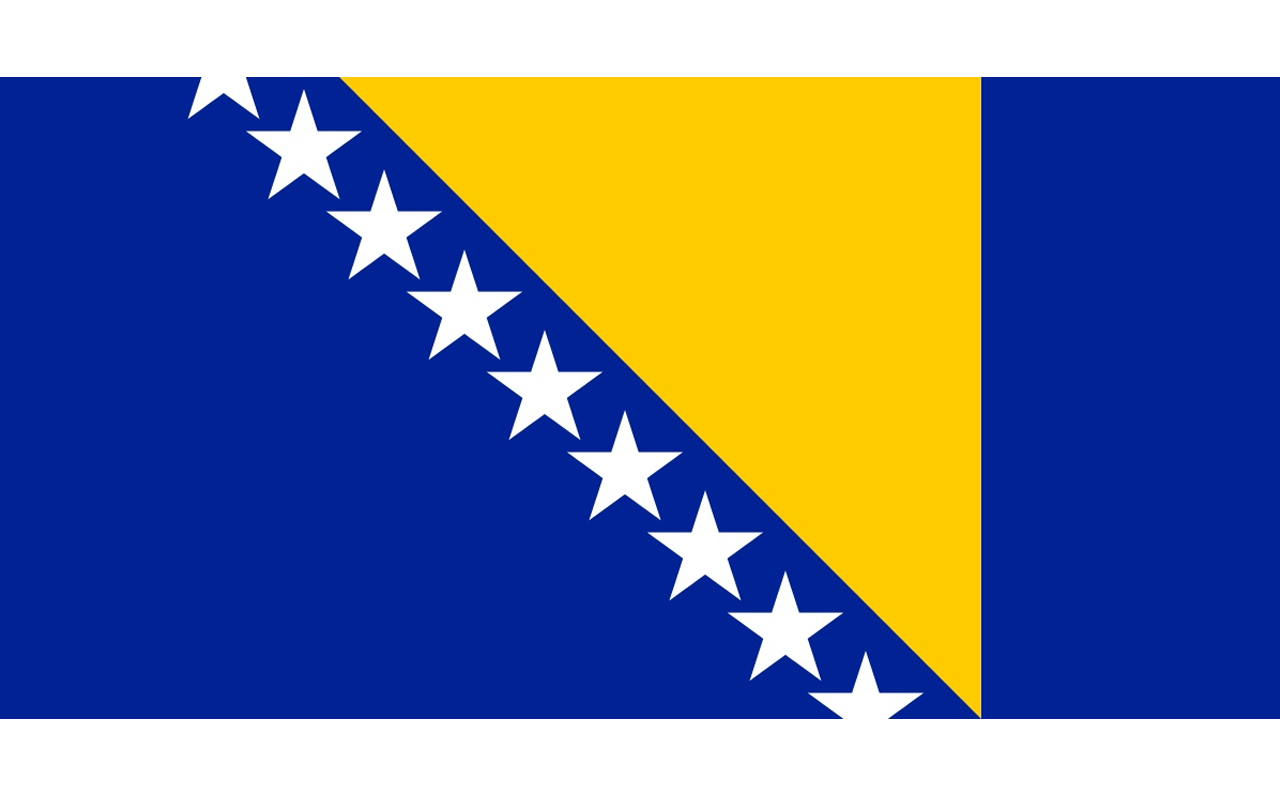
 Flag of Bosnia & Herzegovina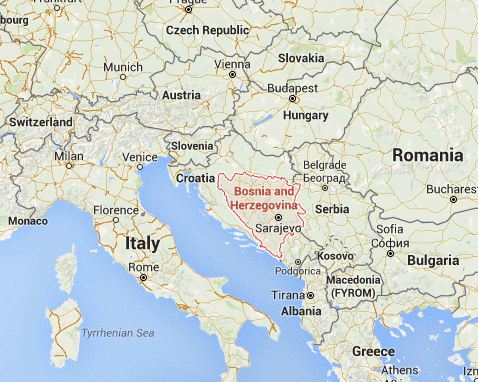
The following information is generalized and compiled from questions posed to the agents and interviewers in Bosnia & Herzegovina. Although au pairs from this country may or may not have had these experiences/beliefs, Au Pair in America wishes to share this general information with our families.
Child Care Skills
- Bosnians are used to taking care of their siblings and cousins.
- Usually, both parents share the responsibility of bringing up their children.
- Bosnians tend to talk to their children about their behavior in order to encourage better behavior.
Family
- Two or more children per family is common.
- Children are taught responsibility by giving them small tasks and duties from an early age such as shopping in a nearby grocery shop or bakery, tidying up their bedrooms, helping to prepare meals and clearing up dishes.
- Bosnia is a very family-oriented country and seeing other family members is important. Parents like to spend time with their children outdoors and sports are encouraged.
English Skills
- English is taught at all levels of education and lessons start in grade 4 (age 10).
- English classes focus on oral and written skills.
- Bosnians have everyday contact with spoken English when watching TV, going to the cinema or using the Internet. Still, a lot of children attend additional English lessons at schools for foreign languages.
Driving Skills
- The minimum driving age in Bosnia is 18.
- The process of obtaining a license usually takes about 3 months and is very expensive – the process includes a theory test, driving lessons and the practical test.
- Bosnian drivers are used to driving in difficult situations as roads can be in a poor state without guardrails, and the weather can change very rapidly in the winter months – Bosnians are used to driving in fog, ice and snow.
Education
- Parents put a lot of focus on children’s education from a very young age.
- Most children in Bosnia start school when they are 6 and finish high school when they are 18/19. Students who have graduated from general secondary schools get the Matura and opt to enrol in any faculty or college after passing a qualification examination and students who graduated from technical schools get a Diploma.
- The Republic of Bosnia and Herzegovina has 8 universities and private and public higher educational systems are governed by the same laws and treated equally.
Health
- Bosnia has been working hard to better its health system since declaring independence following the Balkan War of the 1990s, and Bosnia is still receiving aid in order to achieve this.
- The post-war “Law on Health Insurance” ensures that each person receives a basic health care package regardless of income and available resources.
- It is common to visit the dentist on a regular basis.
COMMON CHARACTERISTICS:
- Bosnian people describe themselves as sociable and hospitable, as well as curious and direct.
- Family, work, sports, music, entertainment, children, local cultural events, good restaurants, and the weather are always good topics to talk about with Bosnians when meeting or speaking to them for the first time.
- Bosnians are very proud of their heritage and culture and they love a sense of community. They are also very respectful of their elders.
FUN FACTS:
- Bosnian coffee is one of the strongest coffees in the world and Bosnians love drinking coffee!
- Bosnians love their unique wedding traditions, which includes the wedding party tooting their horns all the way to the venue and the bride serving coffee to her guests.
- The name “Bosnia” comes from an Indo-European word Bosana, which means water, which is perfect as the country is covered with beautiful lakes, rivers, waterfalls, and a strip of the Adriatic Sea.
USEFUL PHRASES:
- How are you? Kako si ti?
- Fine, thanks. Dobro, hvala.
- My name is… Moje ime je
- Nice to meet you! Drago mi je!
- Thank you. Hvala.
“My au pair experience was a turning point in my life. In 2008 I was 21, and I arrived in the hotel in Connecticut with all other the au pairs from all over the world. Since that moment my life began to unfold in a direction I never imagined.” – Hanka, au pair from Bosnia
“Use the time you spend in America wisely. Don’t hesitate to meet new people, travel and encounter new situations.” – Azra, au pair from Bosnia
“Being an Au Pair will help you understand yourself, learn how to be flexible, mature, grown up and independent.” – Vanessa, au pair from Bosnia
“I like the opportunity to see American life as an insider, to come to know the traditions and customs, approach to bringing up children, managing the household, learning peculiarities of eveyday language, American cuisine, and just the chance to hear from the children I love you.”
Ekaterina, au pair
Russia